Keeping Dogs Safe During Heatwaves – Essential Summer Advice for Dog Owners
Keeping Dogs Safe During Heatwaves – Essential Summer Advice for Dog Owners
Spring & summer are wonderful times to enjoy the outdoors with our dogs, but periods of hot weather can quickly become dangerous for dogs. Unlike humans, dogs cannot cool themselves efficiently and can suffer from heatstroke within minutes. Every year, veterinary practices across the UK treat dogs for preventable heat-related illnesses.
It doesn’t need to be 30 degrees outside to cause problems!
At
Highworth Pet Care,
your dog's welfare is always our highest priority. Whether your dog is staying with us for licensed home boarding or enjoying one of our pet care services, we carefully adapt our routines during periods of hot weather to keep every dog safe and comfortable.
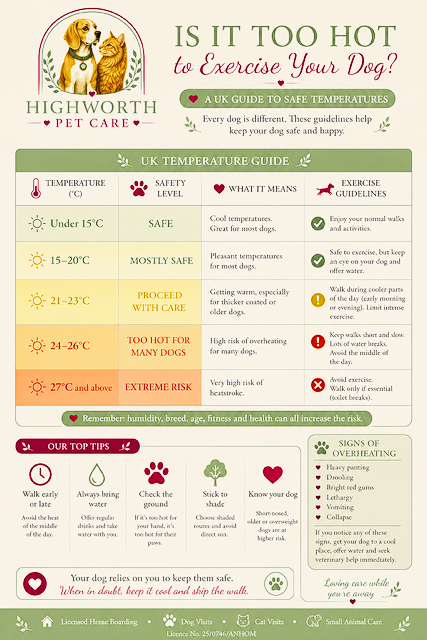
How Hot Is Too Hot?
As a licensed business, we are regulated and required to have hot weather protocols in place. For us, we stop walking services if the temperature reaches 22 degrees.
In practice there are many other factors involved apart from heat, and each dog must be carefully assessed. 20 degrees is perfectly safe for most dogs but for a brachycephalic dog, that could be very unsafe and lead to heatstroke.
Understanding Heatstroke
Heatstroke is a life-threatening emergency that occurs when a dog's body temperature rises faster than it can cool itself. It can affect any dog, even on what many people would consider a "pleasant" summer day.
Dogs most at risk include:
- Flat-faced (brachycephalic) breeds
- Puppies and elderly dogs
- Overweight dogs
- Dogs with heart or respiratory conditions
- Thick-coated breeds
- Dogs exercising in warm weather
Early signs include:
- Excessive panting
- Drooling
- Bright red gums or tongue
- Lethargy or reluctance to walk
- Vomiting or diarrhoea
- Confusion or wobbliness
As heatstroke progresses, dogs may collapse, suffer seizures or lose consciousness. This is a veterinary emergency. If this happens to your dog, you MUST start active cooling for your dog immediately.
- The latest Veterinary advice is Cool 1st, transport to Vet 2nd
- Remove your dog from the heat
- Use a fan if you have one
- Get your dog wet NOW, and if they are otherwise healthy, immerse them in cold but not icy water
- Contact your Vet as soon as possible for advice on transporting your dog to the Vet
- Use air conditioning in the car if you have it, or provide airflow using windows on your way
Keeping Dogs Cool During Heatwaves
One of the best ways to protect your dog is to change your daily routine.
Walk at Cooler Times
Walk early in the morning or later in the evening when temperatures are lower. If in doubt, remember:
If it's too hot for you in a coat, it's probably too hot for your dog to exercise.
Choose a location which offers shade, such as woodland.
On particularly hot days, it is perfectly acceptable to skip the walk altogether and offer alternative indoor enrichment activities.
No dog has ever died from missing a walk, but sadly, many have died from walking in the heat.
Replace Exercise with Enrichment Activities
Mental stimulation can be just as rewarding as physical exercise.
- Ideas include:
- Frozen enrichment toys
- Stuffed food puzzles
- Scent games around the home or garden
- Short training sessions
- Snuffle mats
- Frozen fruit and vegetables suitable for dogs (where appropriate)
These activities help keep dogs occupied while avoiding dangerous overheating.
Provide Plenty of Fresh Water
Always ensure clean drinking water is available. Consider placing several water bowls around your home and refreshing them every couple of hours. It is perfectly safe to give your dog cool water or add ice cubes to their water, unless your dog has heatstroke, in which case it is contraindicated.
Create Cool Resting Areas
Keep curtains closed during the hottest parts of the day, use fans or air conditioning where appropriate and provide cool resting places such as cooling mats or shaded areas.
Many dogs also enjoy lying on tiled floors where available.
Never Leave Dogs in Cars
Even with windows open, the temperature inside a vehicle can rise to dangerous levels within a few minutes.
If your dog cannot accompany you into a building, leave them safely at home.
Beach & Lake Safety for Dogs
Many dogs love visiting the coast, but beaches can present several hidden dangers during hot weather.
Avoid the Hottest Part of the Day
Plan beach visits early in the morning or in the evening, when both the air and the sand are cooler.
Beware of Hot Sand
Sand becomes extremely hot in direct sunlight and can burn sensitive paw pads.
If the sand feels too hot for your bare feet, it is too hot for your dog's paws.
Shock from entering the water
Even in the summer, water temperatures in the UK can be very cold and induce shock. It is very easy for a dog to panic, take on water and flounder.
If your dog is swimming in lakes, bear in mind that there may be debris & weeds beneath the surface that you cannot see, which may cause entrapment and increase the risk of drowning.
Always Provide Shade
Take a beach shelter or umbrella so your dog has somewhere cool to rest.
Regular breaks away from the sun are essential.
Bring Plenty of Fresh Water
Never allow your dog to drink seawater.
Drinking seawater can cause vomiting, diarrhoea, dehydration and salt toxicity.
Make sure you have water for cooling as well as for drinking.
Watch Out for Water Intoxication
Some dogs repeatedly retrieve balls or bite at waves, accidentally swallowing large amounts of water.
This can lead to water intoxication, a rare but serious condition that causes dangerous changes to blood sodium levels.
Signs include:
- Vomiting
- Confusion
- Weakness
- Bloating
- Collapse
- Seizures
Take regular breaks from swimming and avoid excessive repetitive retrieving. Tennis balls retain a lot of water and should be avoided.
Be Aware of Secondary Drowning
Occasionally, dogs may inhale water into their lungs while swimming.
Although uncommon, breathing difficulties may develop several hours afterwards.
Seek veterinary advice immediately if your dog develops:
- Persistent coughing
- Rapid or difficult breathing
- Lethargy
- Collapse after swimming
Avoid Constant Ball Throwing in Water
Repeatedly chasing floating toys can encourage dogs to gulp water while retrieving.
Mix swimming with sniffing, exploring and rest periods instead.
If You Suspect Heatstroke
Time is critical; this is a medical emergency.
The latest veterinary guidance recommends:
- Cool your dog immediately using cool (not ice-cold) water.
- Move them into shade or an air-conditioned area.
- Continue cooling while arranging urgent transport to your veterinary practice.
- Contact your vet straight away.
Cooling should begin immediately and
must not be delayed while travelling to the veterinary surgery
How We Keep Boarding Dogs Safe
At Highworth Pet Care, every dog's routine is adapted according to weather conditions.
During hot weather we:
- Walk only very early when temperatures are safe.
- Provide constant access to fresh drinking water. (For drinking & cooling)
- Offer shaded gardens and cool indoor resting areas.
- Replace walks with enrichment where necessary.
- Closely monitor dogs for any signs of overheating.
- Follow current veterinary guidance if any dog becomes unwell.
Your dog's comfort, welfare and safety always come first.
Final Thoughts
Summer should be enjoyable for both dogs and their owners, but warm weather requires sensible precautions. By adjusting routines, recognising the signs of heat-related illness and making informed choices about exercise and beach visits, we can all help keep our four-legged companions safe.
If you are planning a holiday or need trusted, experienced care for your dog this summer, Highworth Pet Care provides fully licensed home boarding where every dog is treated as one of the family.
Because no walk is ever worth risking a dog's life!
Recent Posts